New fund on offer: HDFC Housing Opportunities Fund

Since 2008, housing and opportunities in housing is not an investment idea that has been much talked about in our market. Given this background, the new fund offer from HDFC AMC does seem unique for its theme and the timing of the theme.

HDFC Housing Opportunities Fund (Series I) is 1140 days, closed-ended thematic equity fund. It is not a real estate or realty fund. It will invest 80-85% in equity stocks of housing and all allied businesses and 15-20% in debt and money market instruments. It can also use derivatives for downside protection in case of falls.

The fund seeks to play on all opportunities arising from a rise in housing demand. A housing boom involves several sectors – banks and financials, cement, steel, chemicals, construction contractors, building products, paints, electricals, and even consumer durables and other household furnishings. So while there may not be relevant opportunities in the real estate sector itself, the theme can be played through these sectors. Further, segments such as steel, cement, construction, banks, and those consumer-related have additional drivers through the planned infrastructure push, bank recapitalisation, and higher consumer spending. The fund may also aim at capping downside risks through derivatives.

A new benchmark with a base date of March 31st 2017 has been created for this fund called the India Housing and Allied Business index, provided by IISL. The heaviest sector weights in this benchmark are banks, cement, and housing finance and the index will be rebalanced half-yearly. 

This fund is betting on a revival in housing demand. While the real estate sector has been moribund for some time now, affordable housing as a sub-segment could see some revival. There are several potential drivers:

housing1

One, there is a focused government push on affordable housing.

The government has a large-scale plan to construct houses over five years under Pradhan Mantri Awaas Yojana – Urban and Gramin.

This push includes interest rate subsidies for borrowers and tax incentives for developers.

For the 6 crore houses stated above, analyst reports peg the demand for key inputs as follows (see accompanying table):housing3

Aside of the above, fresh credit growth by way of home loans also makes housing finance a big sector to play the housing theme.

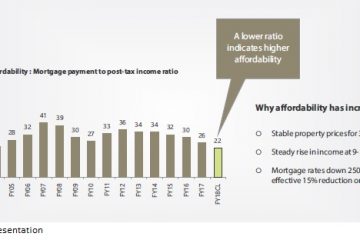
Two, with interest rates moving lower and a general preference by many banks to grow their retail loan book, affordability on part of home buyers has improved.

The data below provides ratio of EMI to post-tax income. A lower ratio indicates higher affordability. As can be seen, the ratio has been steadily falling since FY-12.

housing2
​​

Three, far stricter regulation through the RERA Act can improve transparency, instilling confidence in buyers that developers will honour their obligations. Recourse in case of failure on part of the developers is also defined in the Act, all of which can revive buying sentiment.

Challenges

The challenge in this fund is whether or not the theme is at the cusp of a recovery. A delay in affordable housing product launches, demand not picking up pace, or a longer time for pay-off and earnings acceleration in related sectors, whether through housing or through infrastructure, can set back a price run up. Given the 3-year period for the fund, a delayed pickup can mean that the full benefit of the up-cycle may not be realised. Many of the sectors that are related to housing have mid and small-cap stocks that may run up or correct fast and also see quick dry-up of liquidity. The fund will have to be on its feet both in terms of entry and exits in some of the sectors/stocks.

The fund will be managed by Srinivas Rao Ravuri. You can view the AMC’s presentation of the fund and other details here. The NFO opened on November 16 and closes on November 30. It has a product labelling of high risk. Minimum investment is Rs 5000 and in multiples of Rs 10 thereafter.

The above article explains the feature of HDFC Housing Opportunities’ NFO and is not a recommendation. Investors need to take into account their investment objective, time frame and risk appetite before investing. Mutual funds are subject to market risks. Please read the scheme information and other related documents before investing.


It’s Spectacular Time to Buy Mutual Funds

Large-cap mutual funds had a solid year, according to data from BofA Merrill Lynch Global Research.

The funds posted their highest hit rate in eight years, with 48% of active funds outperforming during 2017. The last time 48% of funds reached that hit rate was in 2008 and 2009.

A fund’s hit rate refers to the number of times it’s right vs. the times it is wrong. A positive hit rate means the fund is right more often than not. The higher the positive rate, the better the fund outperformed in the time frame.

“Managers’ performance was likely helped by both positioning and a favorable backdrop for stock-picking,” BofA said in the Jan. 4 note. “During the year, managers set multiple record overweights in tech and increased their exposure to high-growth and bigger cap stocks, all of which outperformed in 2017.”

“The pair-wise correlations of the S&P 500 stocks dropped to a 23-year low of 9% by the end of 2017 vs. the long-term average of 26%, where lower pair-wise correlations create a more favorable environment for stock pickers,” analysts added.

Value funds posted record outperformance, with the annual hit rate at 73% for the group. At the highest in BofA’s data history across style segments, value funds easily topped growth funds’ 43% and core funds’ 37% hit rates.

Slightly less than half of fund managers, or 44%, beat their benchmarks in December, and the average fund underperformed by 6 basis points. Though 2017 was strong for large-cap mutual funds, small- and mid-cap funds struggled. According to BofA, 40% of small- and 33% of mid-cap managers beat their benchmarks for the year.

But BofA maintained that active managers will continue to do well through 2018.

“Funds appear well-positioned for a late-stage bull market rally,” BofA stated. “Managers have maintained a bias toward high growth, high beta and large size stocks — attributes that typically outperform in late-stage bull markets — and are underweight value, dividend yield and small size, factors that typically underperform late cycle.”

7 Smart Money Moves to make in 2018

These smart money moves will improve you financially and make you richer this year :-


1.) Choose Gold Bonds over Gold Funds


Gold ETFs were once considered as a great investment in the metal. However, this is no longer true. Sovereign gold bonds give better returns than gold funds. Even though both products rely on gold prices and their returns are based on the metal’s performance, but Gold ETFs charge around 1% per annum as expense ratio, gold bonds offer an interest of around 2.5% per annum. So, Gold Bonds will generate 3.5% more returns per annum than gold ETFs.


Gold Funds


 2.) Check mid- and small-cap exposure


The Sensex rose to 28% in 2017 but mid- and small-cap stocks did even better. Experts warn that the mid- and small-cap have become overvalued and investors should avoid them now. The BSE Midcap has a PE of 46.7 while BSE Smallcap has a PE of 114.5. Over the past few months, several mid- and small-cap funds in this category have restricted inflows and some are accepting only SIPs.


 3.) Invest in short-term debt schemes


Debt funds gave insipid returns in 2017, much to the disappointment of investors who had got used to double-digit returns in the preceding 1-2 years. Rising crude oil prices and concerns over meeting the fiscal deficit target made the bond market uneasy, causing a spike in bond yields from 6.4% in January 2017 to 7.3% in December. Experts say investors should stick to short-term debt funds which are not very volatile and are expected to give stable returns.


4.) Stay away from cryptocurrencies


The recent crash in Bitcoins and other cryptocurrencies is a wakeup call for investors. Normal investors should stay away from Bitcoins as they will get the buy and sell timing horribly wrong. Bitcoin is a classic case of the fear of missing out on making money. Some young techies are still chasing it.


5.) Rent instead of buying


Increasingly, people are turning to taking utilitarian products on rent which is both cost-effective and convenient. Given that moving to different cities or localities within a city has become a routine affair, especially for young professionals, renting furniture is gaining popularity. Taking a set of basic furniture and appliances on rent will cost you ₹10,000-15,000 a month. Rentals also come with free delivery and installation, relocation, cleaning and maintenance.


6.) Use NPS to save for retirement


The low cost structure of the NPS makes it one of the cheapest market linked products available to Indian investors. Besides, NPS allows partial withdrawals for specific purposes. Also, one can remain invested after retirement and spread the withdrawals over the next 10 years. This can significantly reduce the tax impact. Opening an NPS account is now a completely paperless exercise. It takes barely 20-25 minutes to open an account if your bank account and PAN are linked to your Aadhaar Card.


7.) Prepay home loan if no tax benefit


Till last year, if a property was leased out, the entire interest paid on the loan could be claimed as a deduction. High-net worth investors used this provision to cut their tax liability. A ₹1 crore loan taken at 8.75% for 20 years could fetch a deduction of ₹8.67 lakh and potentially reduce the borrower’s tax liability by almost ₹2.5 lakh in the first year. However, last year’s Budget capped the total deduction at ₹2 lakh. So, instead of putting money into fixed deposits, PPF and debt funds, prepay your debts.

5 important points you should know about Sensex’s 35k Climb

1.) Reason Behind this Meteoric Rise

The government’s decision to cut its planned market borrowing amount for the current fiscal gave a boost to investor sentiment on Dalal Street on Wednesday. This took the Sensex above the psychologically important 35k mark for the first time in its history with the benchmark closing at 35,082 — up 311 points.

The rise of the Sensex to Mount 35k was also driven largely by domestic institutional investors, especially equity mutual funds (MFs). Mid-cap and small-cap stocks played a bigger role in the relentless rise of the markets than their large-cap peers.


2.) Sectors that rallied

Banking stocks extended gains with the Bank Nifty rising 1.7 per cent. Banking sector stocks gained after the government on Wednesday cut its additional market borrowing requirement by more than half for the current fiscal year to Rs. 20,000 crores.

Consistent buying in IT & pharma stocks alongwith FMCG, lent the required support.


3.) Specific Shares that rose the most

Biggest outperformers were SBI, ICICI Bank, HDFC Bank, Axis Bank, Yes Bank, Infosys & Larsen & Toubro. In 17 sessions alone, shares like Jindal Steel & Power Ltd., Phillips Carbon, Aban Offshore, etc. saw an upswing of upto 40%.


4.) Is it here to Stay ?

Many brokerages expect the Sensex and Nifty to give good returns in 2018. Expecting an earnings growth of 21.5 per cent next fiscal year, domestic stock brokerage HDFC Securities has set its Nifty target at 11,800 for fiscal year 2019.

However, one should exercise caution with respect to individual stocks. Risk-reward ratio looks more favorable for large-cap or fundamentally strong stocks. If you are already invested, you may choose to stay invested but buying more at this point may not be the best move.


5.) Should you book your profits at this level ?

The BSE mid-cap and small-cap indices have surged 42% and 54.5% respectively in the last one year and can probably be termed overvalued. Thus, you should look at reducing your small-cap & mid-cap exposure at these levels. You should continue your existing SIPs to have solid returns in the long term.

Mutual Funds Sahi Hai ?! Be wise.. Be Cautious

It’s easy to be swept away with the current, upbeat market mood! Keep the following BEES tips in mind before you take the leap:-


If you are targeting DIVIDENDS

The reason why balanced funds gained popularity was because of their ability to create wealth while also offering a safety net of debt. However, recently they have been pitched to customers as a source of generating regular income through dividends. Since these dividends are met out of distributable surplus accumulated by them, there lies a risk exposure on account of a bearish market. As an alternative, we advise to consider SWPs and have a better control on their financial goals.


If LONG TERM is not your cup of tea

Since the market is at its peak, expecting short term gains is bit of a longshot. If mutual funds continue to be your investment of choice, be ready to be committed for a longer period to earn the desired returns. The market could see bit of a downturn if investors look to book profits at these levels and hence, your investment horizon will be critical to enter the market at this point.


If you are thinking of PROFIT BOOKING

In the aforementioned tips, we highlighted the need for caution for investors thinking of taking a fresh position or entering the market for the first time at these levels. However, for those already invested, we suggested you stay invested. This will help you gain from compounded returns over your investment lifecycle.


If your dilemma is : MID-CAP or LARGE-CAP

Mid-cap funds have won over investors’ hearts over the last three years with 23% annualized returns. On the other hand, small-cap funds did not disappoint either and attained a 17% annualized return during the same period. This has resulted in a comprehensive victory for them over their influential peers : the Large-Cap funds. But yet again, we would like to emphasize on the importance of staying invested in mid-cap & small-cap funds & not enhancing your exposure therein. Their recent returns are surely tempting, but their volatility should keep the temptation in check.


If you think you don’t NEED EXPERT ADVICE

The need for expert advice has never been more prominent. When the spirits are high, every investor tends to believe that he has got it all figured out. However, the ‘real experts’ can help you decide the type of fund most suited to your risk profile, your quantum of exposure and most importantly, time your market entry & exit.